Perception is always more powerful than reality when you control the information
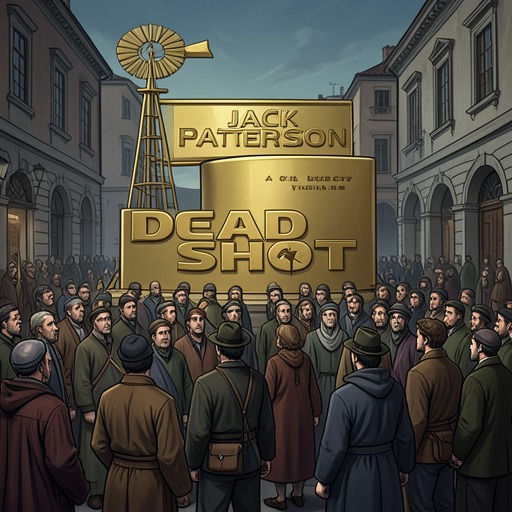
Dead Shot“Perception is always more powerful than reality when you control the information” is the novel’s clearest formulation of how power operates through controlled narratives. The statement is made while Gold’s men manufacture a false crime scene, but its reach extends beyond that immediate deception: editors, officials, investigators, and threatened witnesses all compete to determine what the town will be allowed to know and therefore what it will believe.
Meaning and Immediate Context
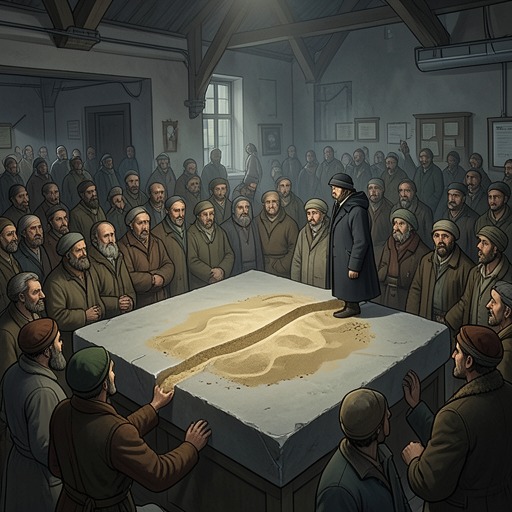
The expression appears after Gold’s men have staged the deaths of Buddy Walker and Willie Nelson as a drug deal gone wrong. Walker’s body is left over the steering wheel with his firearm, while Nelson is placed beside the road holding the murder weapon, with meth in his pocket. The arrangement supplies the visible details of an apparently coherent explanation: a drug dealer, a known unstable drug user, and a fatal transaction. The reality that Walker was an FBI agent is treated as something the public would not believe because the manufactured scene has been made more persuasive than the truth.
Gold’s control depends on more than planting objects. His men exploit what Statenville already thinks it knows about the victims, including Walker’s reputation and the town’s assumption that Willie Nelson was “nuts.” The false account is therefore designed to fit existing prejudice rather than challenge it. The staged evidence does not need to prove the truth; it only needs to make an alternative explanation seem socially impossible.
Information as Power
The phrase describes a system in which information is not merely reported but arranged, withheld, and weaponized. Gold’s men turn a murder scene into a narrative, selecting bodies, weapons, drugs, and reputational details as though they were components of an argument. The narrator calls framing an art form and presents Statenville as a place where snooping parties have spent twenty years painting convincing canvases against anyone who survives them. Once a person has been publicly discredited, that person’s testimony loses force even when it is accurate.
The same mechanism appears in the pressure placed on Cal Murphy and Kelly Mendoza. Guy Thompson initially orders Cal to go to the sheriff’s office, ask Sheriff Jones for information, and report back so that the newspaper can decide where to go next. He also insists that Kelly accompany Cal and obtain a dominant photograph for Wednesday’s paper, even suggesting that an image of Sheriff Jones looking forlorn would serve. News is thus shaped through assignment, image selection, and editorial purpose before the underlying facts have been established.
Editorial and Official Control
When Cal and Kelly continue digging into the deaths of the three boys, Joseph Mendoza and Hunter Jones claim that nobody in town wants to know anything beyond funeral arrangements and where to send flowers. Cal resists that account, saying that something strange is happening and that people will want to know. Guy, however, warns that he dislikes anything that brings the publisher and the sheriff down on him. His objection reveals a second form of information control: institutional pressure does not have to destroy a story outright if it can make the reporter retreat, doubt the public’s interest, or accept a safer assignment.
That pressure becomes explicit when Guy orders Cal to write only a reaction piece. Such a piece reduces reporting to asking people about a topic, quoting their responses, and treating those responses as the story. Cal understands the assignment as a demotion from investigative journalism to a form of mechanical transcription, and the change destroys the prospect of a major article. Editorial authority consequently controls not only what reaches readers but also the kind of knowledge the reporter is permitted to produce.
Threats, Secrecy, and Counter-Narrative
The warning letter delivered to Cal extends the same struggle from editorial coercion into direct intimidation. Its anonymous writers call him an important ally but tell him to keep the previous night’s events secret, create a cover story, and continue his job without asking questions. They promise information that could bring him national attention while warning that other methods of persuasion are available if he refuses. The offer of professional glory and the threat of punishment work together: both seek to make Cal manage his own silence.
The letter also orders Cal to show it to no one, specifically including Kelly and Guy, and to conceal the truth about the previous night. This instruction attempts to isolate him from the relationships and institutions that might help him test the message. It demonstrates that information can be controlled not only by suppressing publication but by regulating who is allowed to compare accounts. The most dangerous fact, in this system, is not simply a hidden fact; it is a fact that can circulate among independent witnesses.
Public Truth and the Final Report
Against these pressures, Cal’s story eventually appears in two newspapers the next day under his byline, “By Calvin J. Murphy,” and for The Tribune. Its publication marks a reversal in the contest between managed perception and documented reality. The false scene, the warnings, the editorial restrictions, and the town’s preferred explanations have not erased the underlying events. They have instead become obstacles that the final report must overcome.
The expression therefore functions as both description and warning. It explains why fabricated evidence can survive in Statenville, why reputations can be destroyed before testimony is heard, and why a newspaper’s control over wording and images carries real political force. Yet the final appearance of Cal’s story shows the limit of perception management: control is powerful only while the information remains controlled. Once a credible account reaches more than one newspaper, the manufactured version of reality is no longer the only story available.